Overview of synthetic sweeteners such as Aspartame, Acesulfame K and Sucralose, plus Fructose: sweetness compared with sugar, common uses in food and drinks, and safe-use notes. Vinh Nam Anh supplies sweetener ingredients with fast quotations and nationwide delivery
As demand grows for diet products, sugar reduction and low-calorie foods, synthetic sweeteners appear more and more in soft drinks, confectionery, chewing gum, yoghurt and functional foods. This article explains what synthetic sweeteners are, the common types such as aspartame, acesulfame K, sucralose, saccharin and sodium cyclamate, their applications and what to keep in mind when using them.
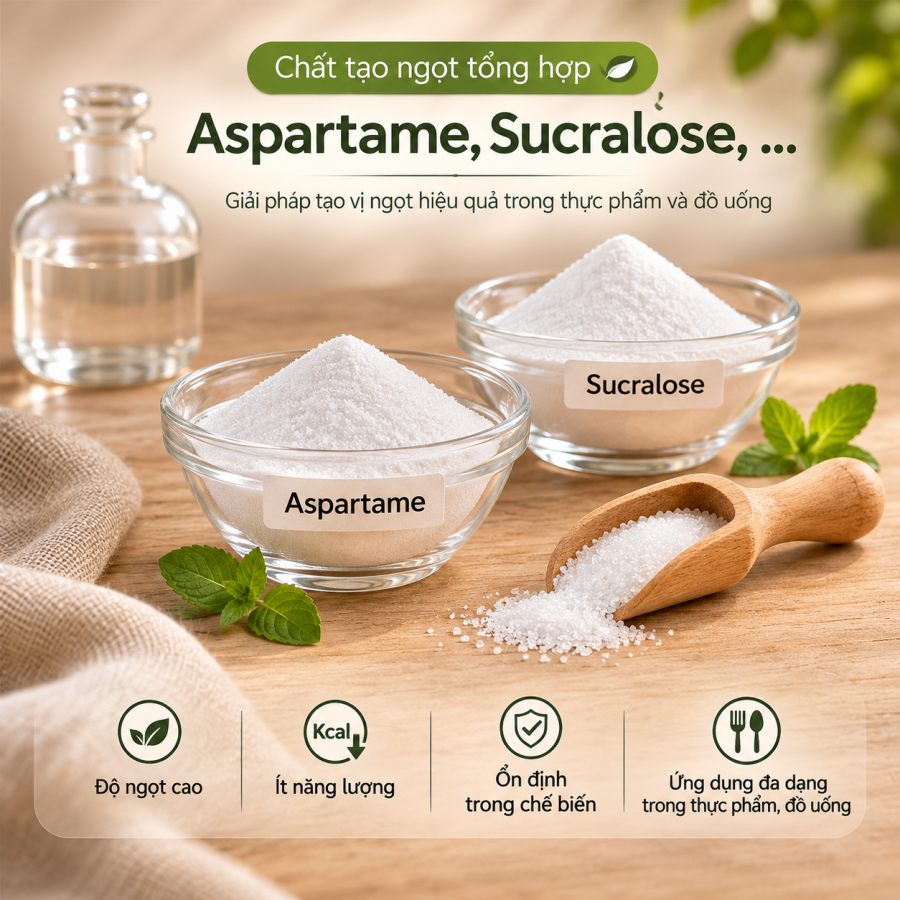
Approximate sweetness of common synthetic sweeteners compared with cane sugar
Synthetic sweeteners (also called artificial sweeteners) are compounds made by chemical processes that taste many times sweeter than cane sugar (sucrose). Because only a very small amount is needed, they contribute very little energy to a food.
Sweeteners can be added during processing or blending, and are found in many diet, reduced-sugar and low-calorie products. Each one differs in sweetness, heat stability and flavour, so the choice depends on the type of product.
Note: people with medical conditions or special dietary needs should consult a doctor or nutritionist before using them.
Aspartame is made from two amino acids, aspartic acid and phenylalanine, and is about 200 times sweeter than cane sugar. It gradually loses sweetness at high temperatures, so it is mostly used in drinks, yoghurt, chewing gum and products that are not cooked. People with phenylketonuria (PKU) must avoid aspartame.
Acesulfame K is about 200 times sweeter than cane sugar and is heat-stable, so it can be used in products that undergo heat treatment, such as baked goods. It is often blended with other sweeteners (such as aspartame or sucralose) to improve flavour and lengthen the sweet taste.
Sucralose is about 600 times sweeter than cane sugar, has a taste close to sugar and is heat-stable. It is widely used in soft drinks, confectionery, ice cream, gelatin and diet foods.
Saccharin is about 300 to 500 times sweeter than cane sugar. At high concentrations it can leave a bitter or metallic aftertaste, so it is usually blended with other sweeteners to balance the flavour.
Sodium cyclamate is about 30 to 50 times sweeter than cane sugar, has a fairly pleasant sweet taste, is heat-stable and low in cost, so it is used in many drinks and foods. Whether it is permitted, and at what maximum level, differs between countries, so check the regulations of the market where the product is sold.
Stevia is a sweetener derived from the stevia plant (steviol glycosides), not a synthetic sweetener. It is often mentioned together with other non-sugar sweeteners because it is also used to reduce sugar in foods.
Vinh Nam Anh Co., Ltd. supplies many food raw materials and additives to manufacturers, including sweeteners such as aspartame, acesulfame K (ACK), sucralose and fructose. Our team helps you choose the type and blending ratio that suit your product, with fast quotations and nationwide delivery. See the product catalog for more.
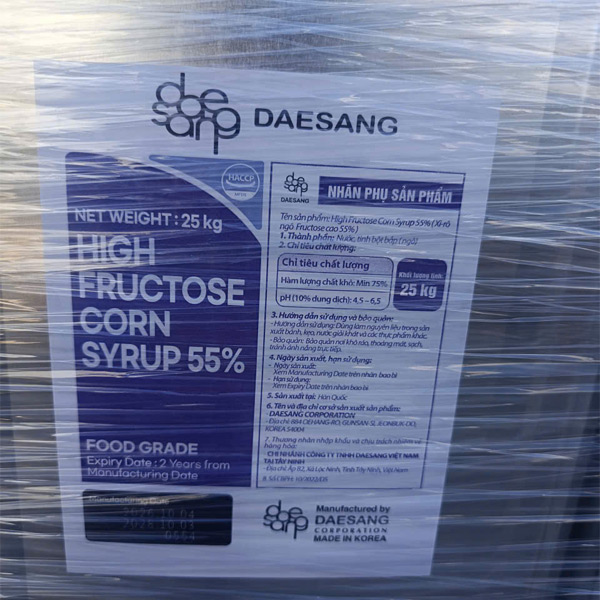
Fructose, one of the sweeteners supplied by Vinh Nam Anh
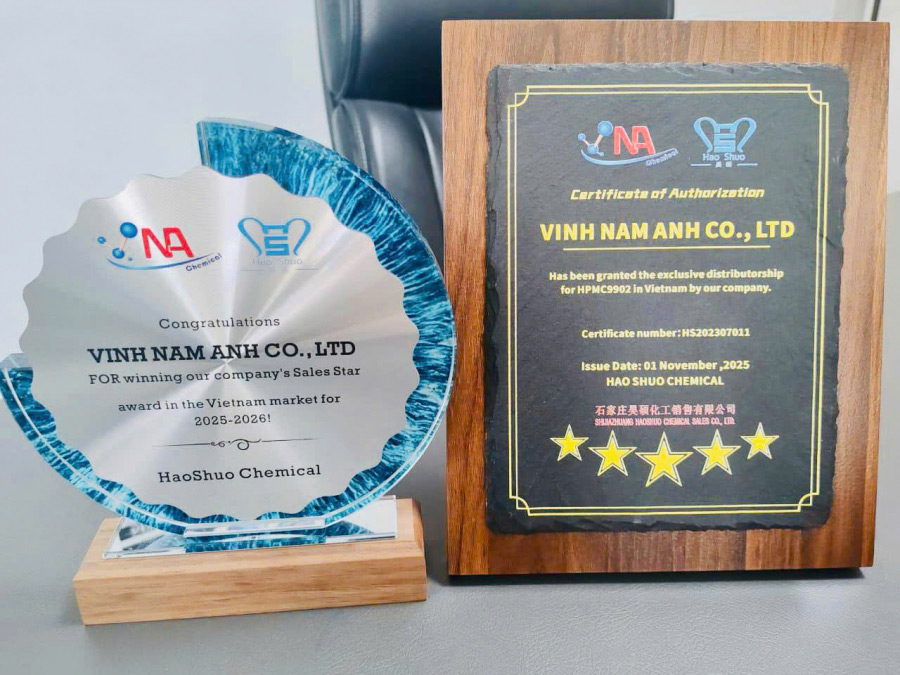
Sales Star 2025-2026 trophy awarded to Vinh Nam Anh by HaoShuo Chemical for the Vietnam market
They are compounds made by chemical processes that are many times sweeter than cane sugar and provide almost no energy, used to replace sugar in food and drinks.
Permitted sweeteners have been assessed by bodies such as JECFA and EFSA, which set an ADI. Using them within the permitted limits and according to each country’s regulations is what matters.
Acesulfame K, sucralose and sodium cyclamate are more heat-stable than aspartame, so they are often chosen for products that undergo heat treatment.
People with phenylketonuria (PKU) should avoid aspartame because it contains phenylalanine.
Choose a supplier with a clear origin and transparent technical information. Vinh Nam Anh supplies aspartame, acesulfame K, sucralose and fructose; please contact us for advice and a quotation.
Synthetic sweeteners help reduce sugar and energy in food and drinks. Each one differs in sweetness, heat stability and points to watch, so choose the right type, use it at the right level and follow current regulations.
For advice or a quotation on sweeteners, please contact:
+84 916 348 319 (Hotline)
+84 919 122 123 (Hong)
See more in the product catalog of Vinh Nam Anh