Sodium benzoate (E211) is found in soft drinks, dipping sauces, jams, cosmetics and even medicines. This article explains what sodium benzoate is, why it preserves, whether it is safe, how it is regulated in Vietnam, how to calculate the dosage and how to choose a reliable supply.
Key takeaways
Contents
Sodium benzoate (C6H5COONa) is the sodium salt of benzoic acid, international food additive code E211 (INS 211), CAS No. 532-32-1. Commercially it is a white, odourless solid (powder, prill or noodle) that dissolves very well in water (about 60 g per 100 ml at room temperature) and only slightly in alcohol. Thanks to its solubility, reasonable cost and strong effect in acidic conditions, it is one of the most widely used preservatives in the world.
| Other names | Sodium benzoate, E211, INS 211 |
| Formula | C6H5COONa |
| Molar mass | 144.11 g/mol |
| CAS No. | 532-32-1 |
| Appearance | White, odourless solid |
| Water solubility | Very good |
| Additive class | Preservative |
Benzoic acid occurs in small amounts in fruits such as cranberries and plums and in spices such as cinnamon and cloves. Industrial sodium benzoate is synthesised to a high purity, usually 99% or more.
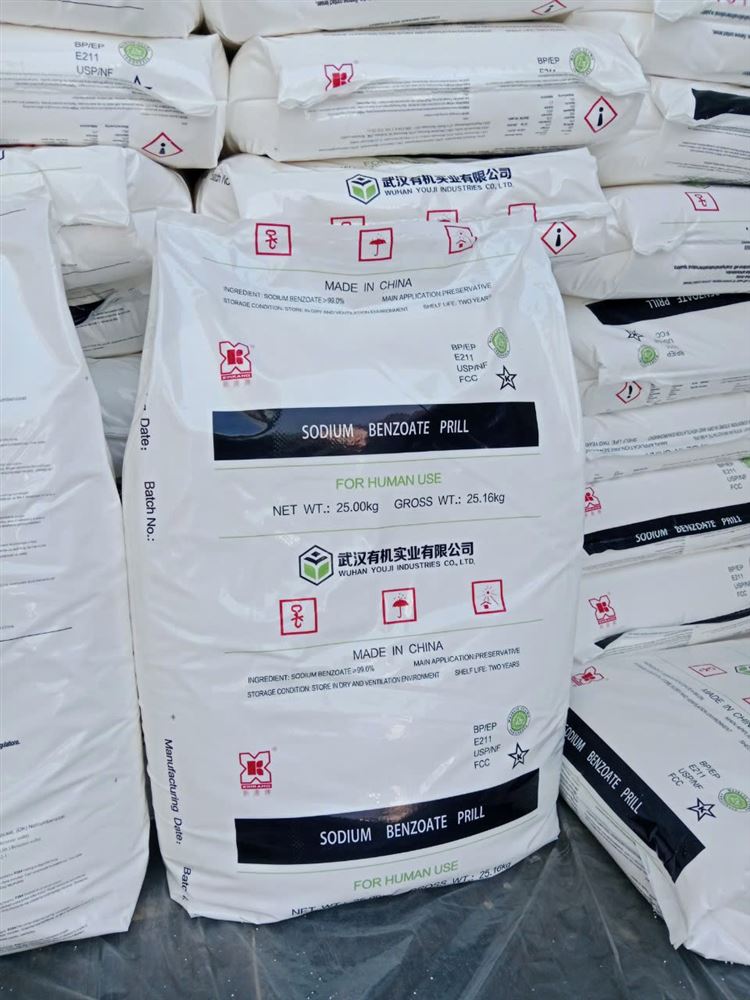
It is produced by neutralising benzoic acid with sodium hydroxide (or sodium carbonate). The solution is purified, concentrated, crystallised and dried; the final granulation step gives powder, prill/dense or noodle forms with the same active ingredient but different dust levels and dissolving speeds.
The salt itself does not kill microorganisms. In an acidic product, part of the sodium benzoate turns into undissociated benzoic acid, which passes through the cell membranes of yeasts and moulds, disturbs the cell interior and stops them from growing.
Benzoic acid has a pKa of about 4.2. The lower the pH, the higher the share of the active form. The table below was calculated by Vinh Nam Anh using pKa ≈ 4.2:
| Product pH | Share of active benzoic acid | Preservative effect |
| 3.0 | about 94% | Very good |
| 4.0 | about 61% | Good |
| 4.5 | about 33% | Moderate |
| 5.0 | about 14% | Low |
| 6.0 | about 1.5% | Very low |
That is why sodium benzoate suits soft drinks, dipping sauces, chilli sauce and pickles. For near-neutral products, adjust the pH or combine it with another preservative.
It is most effective against yeasts and moulds, the main causes of fermentation, film and mould in acidic foods; its effect on bacteria is moderate.
| Industry | Typical products |
| Food | Dipping sauces, chilli and tomato sauce, jam, pickles, jelly, noodles |
| Beverages | Carbonated soft drinks, fruit juice, bottled tea, beer, wine |
| Cosmetics | Shower gel, shampoo, creams, mouthwash |
| Pharmaceuticals | Syrups, oral solutions |
| Industry | Corrosion inhibitor |
This is the largest use. Sodium benzoate keeps dipping sauces, chilli sauce, jams, pickles and soft drinks from fermenting, forming film or moulding during storage and sale, especially in acidic products.
It is used as a preservative in shower gels, shampoos, creams and mouthwash to prevent yeast and mould contamination after opening.
It preserves syrups and some oral solutions.
It is used as a corrosion inhibitor for metals in some technical solutions.
Effectiveness depends strongly on the pH of each product (typical reference values):
| Product group | Typical pH | Suitability of sodium benzoate | Tip |
| Carbonated soft drinks | about 2.5–3.5 | Very suitable | Control if vitamin C is present |
| Fruit juice | about 3–4 | Suitable | Can be combined with potassium sorbate |
| Chilli/tomato sauce, dipping sauce | about 3.5–4.5 | Suitable | Keep pH stable with citric acid |
| Jam, pickles | about 3–4 | Suitable | Combine with hygiene and tight packaging |
| Cakes, bread | about 5–6.5 | Limited | Prefer potassium sorbate, sorbic acid |
| Near-neutral products | above 6 | Poor | Use other preservation methods |
Whatever preservative you use, factory hygiene, clean raw materials and tight packaging remain the foundation of shelf life.
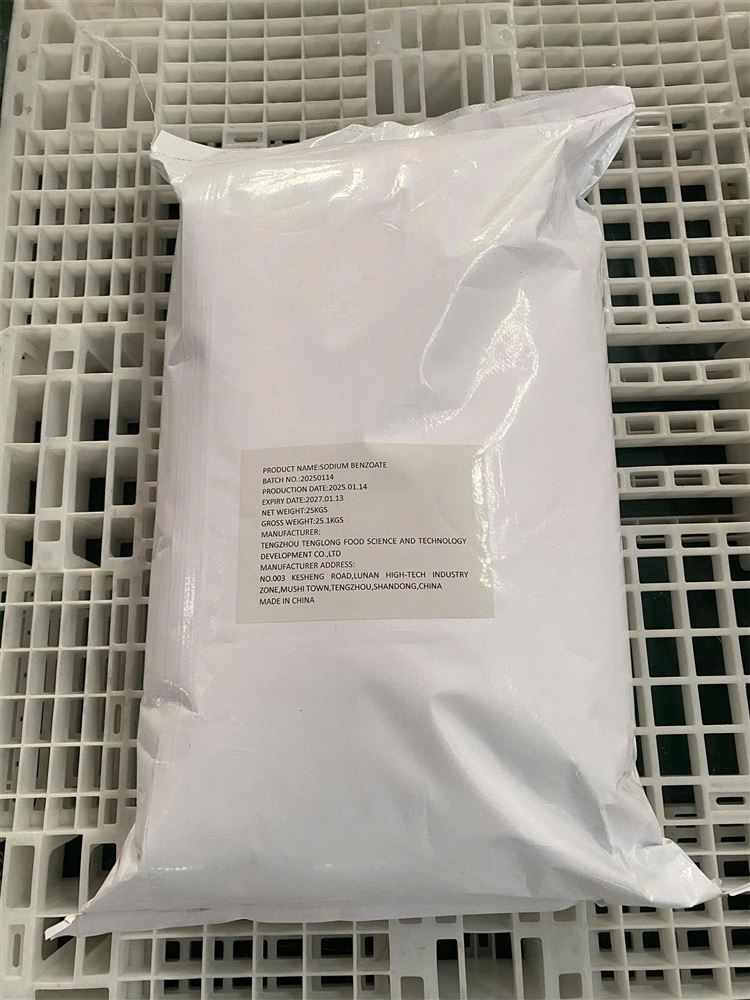
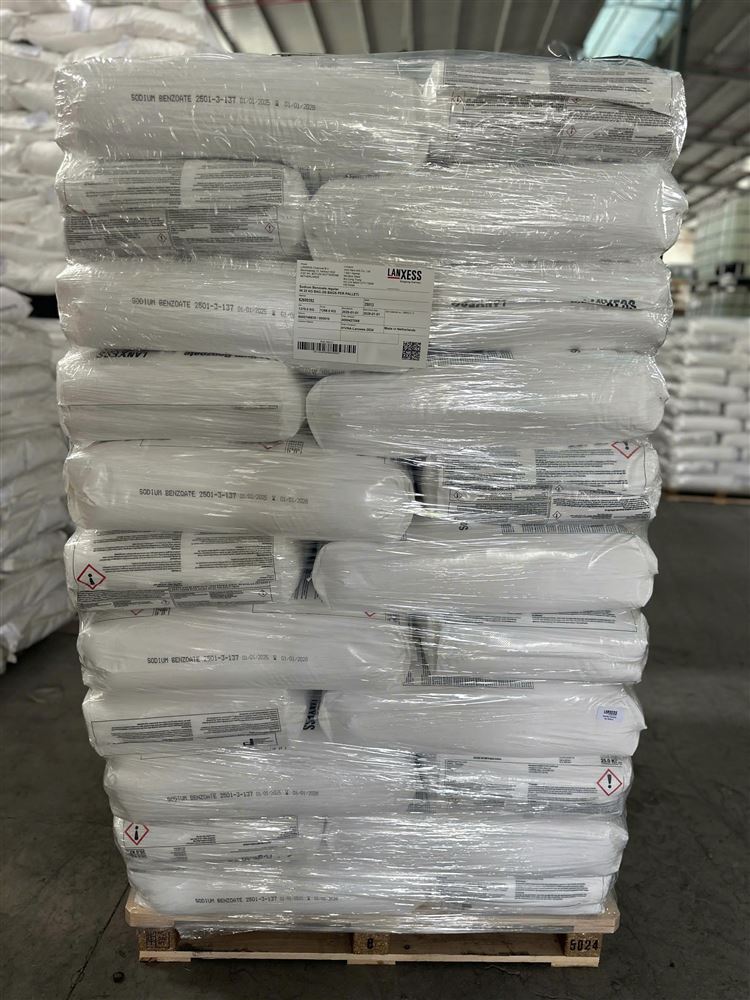
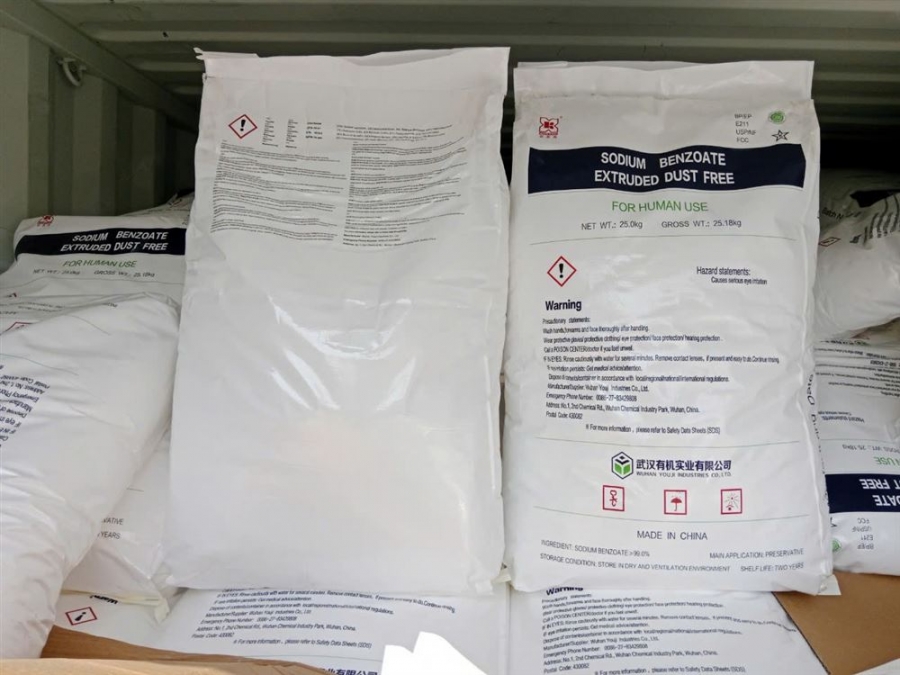
Used within the permitted limits, sodium benzoate is considered safe by regulators. The FAO/WHO Joint Expert Committee on Food Additives (JECFA) set an acceptable daily intake (ADI) for benzoic acid and benzoate salts of 0–5 mg/kg body weight (as benzoic acid). For example, a 60 kg adult has an ADI of up to about 300 mg per day from all sources.
In the body, benzoate is conjugated with glycine in the liver to form hippuric acid, which is excreted in urine and does not accumulate long term.
ADI is the amount that can be consumed daily over a lifetime without appreciable risk. It adds up across all foods and drinks in a day, so producers must respect the maximum level for each product.
No. Sodium benzoate (E211) is on the list of permitted food additives in Vietnam under Circular 24/2019/TT-BYT of the Ministry of Health. Each food category has its own maximum level.
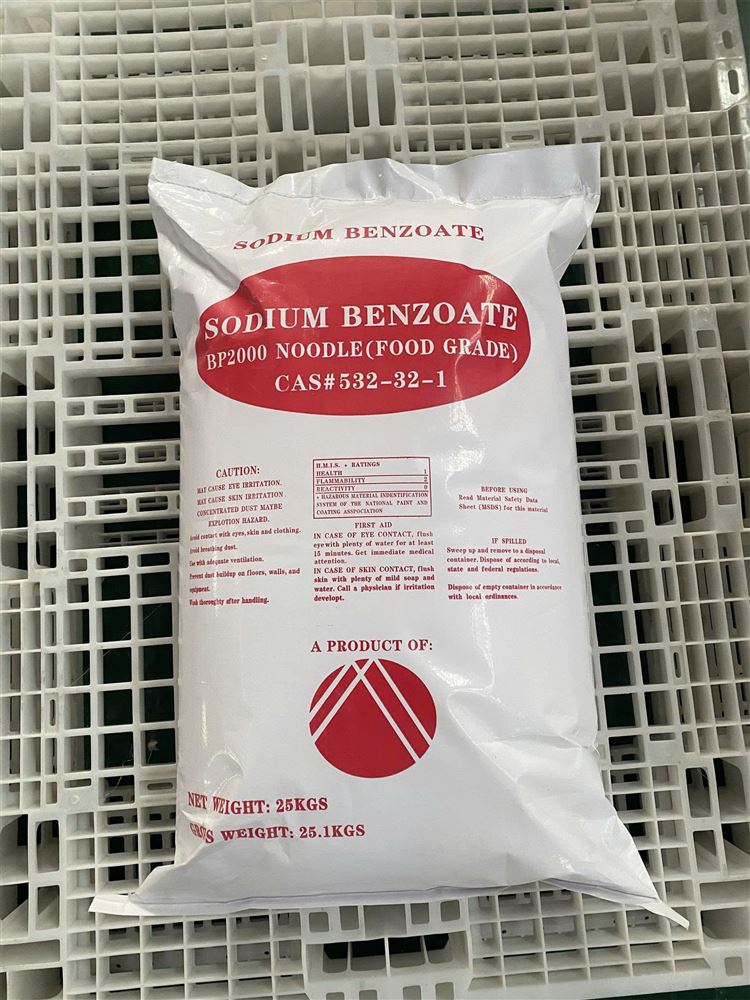
Dissolve sodium benzoate in a little water before adding it to the batch so it is evenly distributed.
Use citric acid to lower the pH and improve effectiveness (see the table in section 2).
Sodium benzoate (g) = batch weight (kg) × dosage (%) × 10. Example: a 200 kg batch of dipping sauce at 0.05% → 200 × 0.05 × 10 = 100 g. The actual dosage must stay within the maximum permitted for the product category.
Limits are often expressed as benzoic acid:
| You have | Equivalent to |
| 1 g sodium benzoate | about 0.847 g benzoic acid |
| 1 g benzoic acid | about 1.18 g sodium benzoate |
(Based on molar masses: benzoic acid 122.12 g/mol, sodium benzoate 144.11 g/mol.)
In beverages, sodium benzoate with vitamin C (ascorbic acid) can form small amounts of benzene under heat or light; control the formula, processing temperature and storage conditions.
| Sodium benzoate (E211) | Potassium sorbate (E202) | Sorbic acid (E200) | |
| Works well at | pH below 4.5 | pH up to about 6.5 | pH up to about 6.5 |
| Water solubility | Very good | Very good | Poor |
| Strong against | Yeasts, moulds | Yeasts, moulds | Yeasts, moulds |
| Typical use | Soft drinks, sauces, pickles | Bakery, cheese, jam, drinks | Bakery, dry products |
For low-pH products, sodium benzoate is usually the economical choice. For higher-pH products or a neutral taste, potassium sorbate fits better. Combining the two at low doses often works better than one at a high dose. See potassium sorbate and sorbic acid.
Sodium benzoate dust can irritate the eyes; wear safety glasses and a mask and wash hands after use.
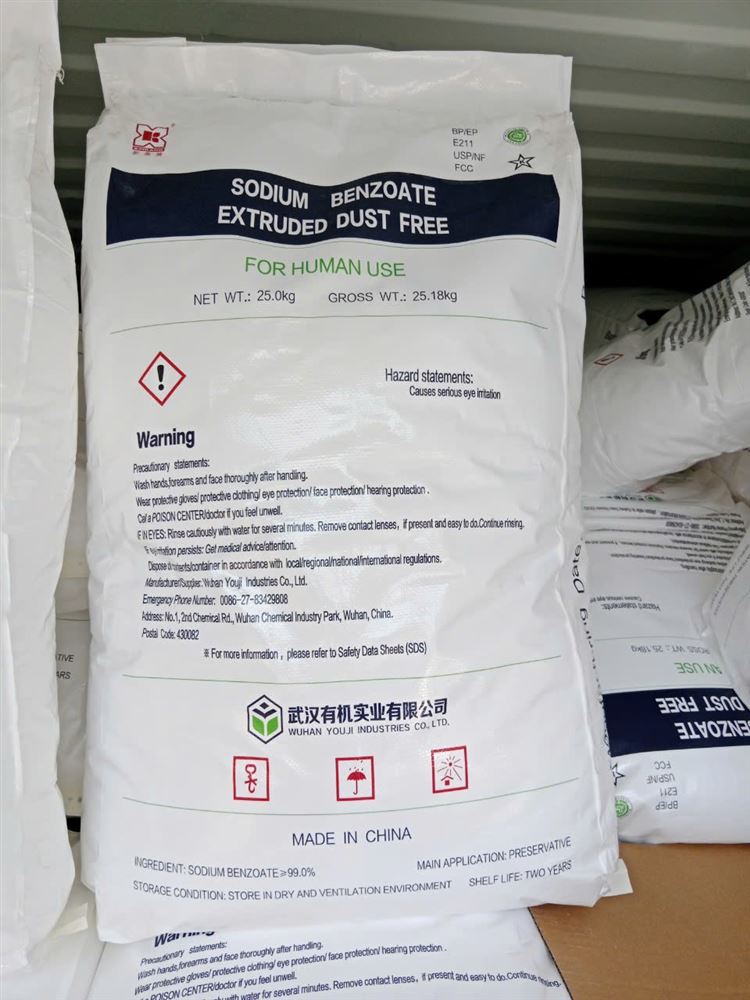
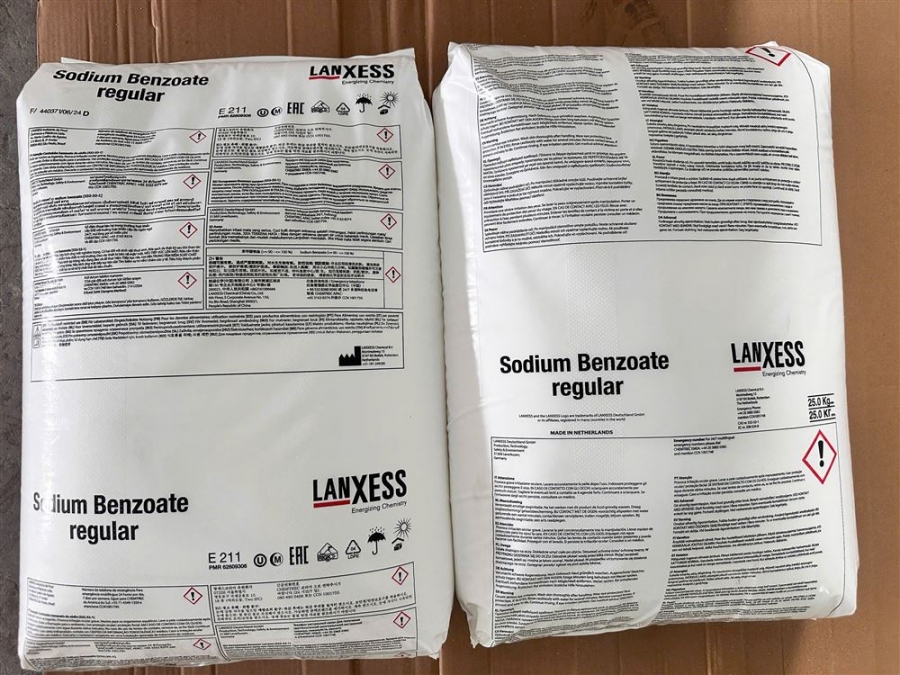
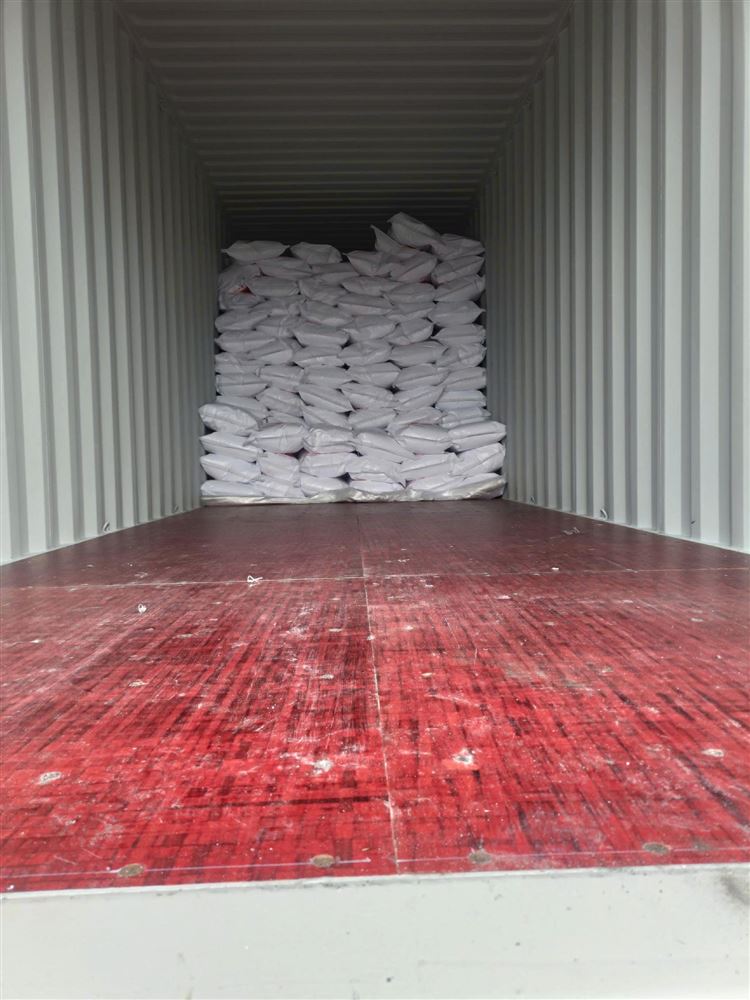
Keep bags closed in a dry, cool, ventilated place on pallets, away from strong oxidisers and strong acids; use first-in, first-out within the shelf life (usually 24 months).
| Check | Requirement |
| Grade | Food grade (BP/USP/FCC) |
| Assay | 99% or more, with COA |
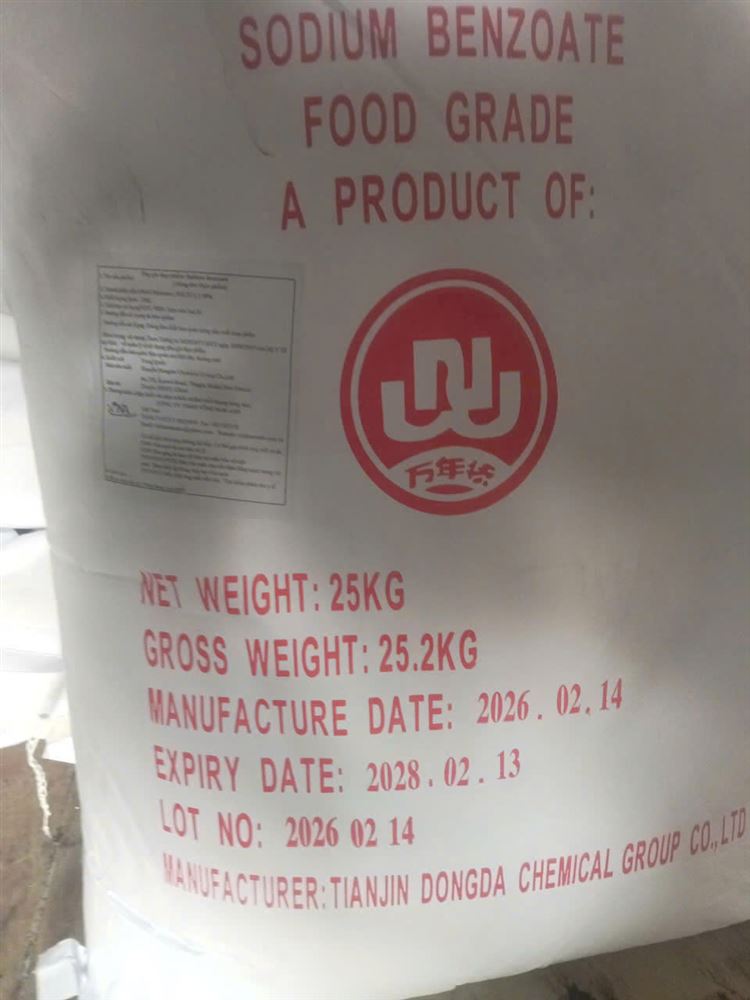
| Bag label | CAS 532-32-1, E211, production and expiry dates |
| Documents | COA for every lot, CO, full invoices |
| Supplier | Warehouse, stable delivery, product declaration |
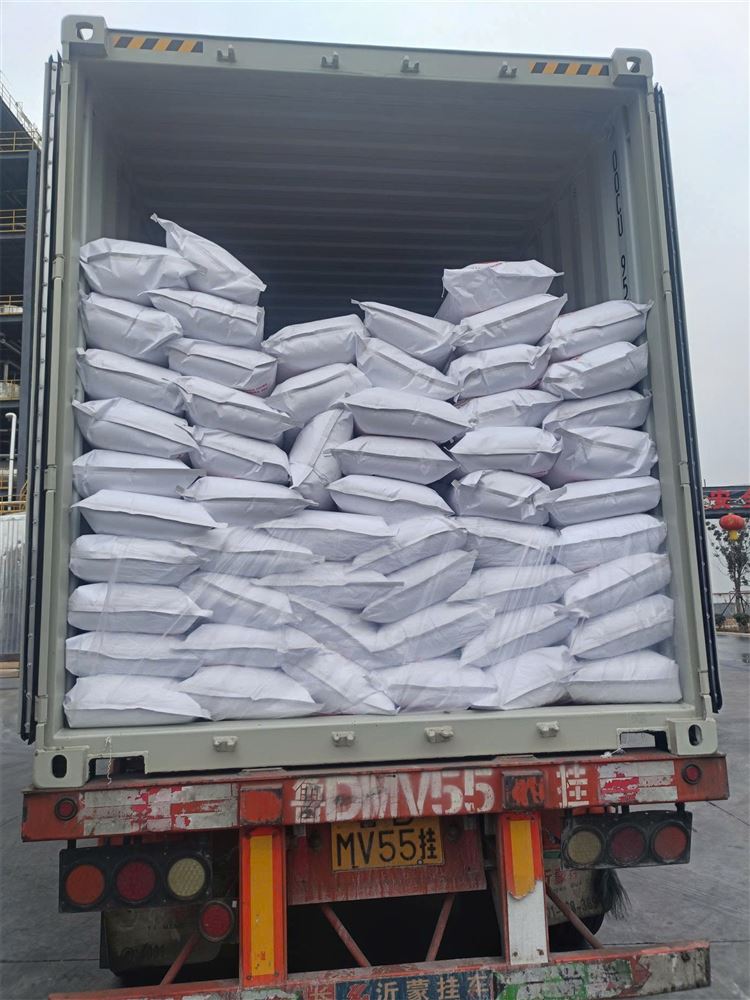
Vinh Nam Anh imports sodium benzoate directly from manufacturers in the USA, China and the Netherlands, with product declaration, COA for every lot, CO and full invoices, stock in Ho Chi Minh City, branches in Hanoi and Can Tho and nationwide delivery.
???? See our sodium benzoate product and request a quotation
Yes, very well (about 60 g per 100 ml at room temperature).
Soft drinks, fruit juice, dipping sauces, chilli and tomato sauce, jam and pickles.
Sodium benzoate is the salt, more soluble and easier to use; in acidic products it partly turns into benzoic acid to act.
No, it is permitted under Circular 24/2019/TT-BYT within the limits for each food category.
It is safe within permitted limits; JECFA set an ADI of 0–5 mg/kg body weight (as benzoic acid).
At pH 6 only about 1.5% is in the active form (see section 2).
Yes, it is a common preservative in cosmetics and personal care.
Same active ingredient; prill and noodle are less dusty and easier to weigh, powder dissolves faster.
Usually 24 months from production if unopened and kept dry.
At normal doses hardly; overdosing can give a slightly bitter, astringent taste.
Depending on pH, potassium sorbate or sorbic acid; many factories combine both.
Choose a supplier with COA, CO, full invoices and a real warehouse such as Vinh Nam Anh – see our sodium benzoate.
Sodium benzoate (E211) is an effective, economical preservative permitted in Vietnam, especially suited to acidic products such as soft drinks, dipping sauces, chilli sauce, jams and pickles. To use it correctly and safely, control the pH, calculate the dosage for your product category, dissolve it before mixing and choose food grade material with full documents. Vinh Nam Anh is ready to advise on the right form or a combination with potassium sorbate for your product.
Contact us for advice and a sodium benzoate quotation: