Acesulfame K (E950) is found in sugar-free soft drinks, chewing gum, yogurt, instant coffee and many syrup medicines. This article explains what Acesulfame K is, whether it is harmful, how much is safe per day, how it is regulated in Vietnam, how manufacturers use it, and how it compares with other sweeteners.
Contents
Acesulfame K (Acesulfame Potassium, Ace-K) is a synthetic high-intensity sweetener with the international additive code E950 (INS 950). It is the potassium salt of acesulfame, a white crystalline powder about 200 times sweeter than sucrose while providing virtually no energy. In Vietnam's food industry it is commonly called ACK.
| Other names | Acesulfame Potassium, Ace-K, ACK |
| Additive code | E950 (INS 950) |
| Additive class | Sweetener (synthetic) |
| Chemical formula | C4H4KNO4S |
| Molar mass | 201.24 g/mol |
| CAS number | 55589-62-3 |
| Appearance | White crystalline powder, odorless, sweet |
| Sweetness | About 200 times sucrose |
| Energy | 0 kcal (not metabolized) |
| ADI (JECFA) | 0–15 mg/kg body weight/day |
Acesulfame K was discovered by accident in 1967 by chemist Karl Clauss at Hoechst (Germany). Today it is produced industrially by chemical synthesis, neutralized with potassium to form the salt, then purified and crystallized into a high-purity white powder. China is currently the world's largest producer of Acesulfame K.
Acesulfame K is about 200 times sweeter than sucrose, so a very small amount is enough. It is absorbed but not metabolized by the body and is excreted unchanged in the urine, so it provides no calories and does not raise blood glucose.
Unlike Aspartame, Acesulfame K withstands heat (it melts and decomposes at about 225°C) and is stable in acidic conditions. It can therefore be used in baked goods, pasteurized products and low-pH carbonated drinks without losing sweetness.
Acesulfame K dissolves quickly in water (about 270 g/L at 20°C) and is only slightly soluble in alcohol, which makes it convenient for beverages and syrups.
Its sweetness is perceived quickly. Used alone at high concentrations it can leave a slightly bitter aftertaste, so in practice Acesulfame K is usually blended with Aspartame, Sucralose or sugar for a rounder, more sugar-like taste.
This is the most searched question about E950. The short answer: Acesulfame K is approved by the world's major food safety authorities and by Vietnam's Ministry of Health, and is considered safe when used within permitted limits. Research is still ongoing in some areas, and the general advice is not to overconsume sweeteners.
| Authority | Assessment |
| JECFA (FAO/WHO Joint Expert Committee on Food Additives) | Acceptable daily intake (ADI) of 0–15 mg/kg body weight |
| FDA (USA) | Approved in 1988, extended to general-purpose sweetener in food in 2003 |
| EFSA (European Union) | Authorized as E950; re-evaluated in 2025 with an ADI of 15 mg/kg body weight/day |
| Ministry of Health, Vietnam | Permitted under Circular 24/2019/TT-BYT (INS 950), with maximum levels per food category |
Cancer concerns mainly came from animal studies in the 1970s–1980s that were criticized for weak design. Later studies, including work by the US National Toxicology Program (NTP), found no evidence that Acesulfame K causes cancer. No regulatory authority classifies Acesulfame K as a carcinogen. (Note: in 2023 the International Agency for Research on Cancer, IARC, classified Aspartame – E951, not Acesulfame K, as "possibly carcinogenic" (group 2B), while JECFA kept Aspartame's ADI unchanged.)
Because it is not metabolized, Acesulfame K does not raise blood glucose and is common in "sugar-free" products for people who need to limit sugar. Some studies in mice suggest it may alter gut bacteria, but human evidence is not sufficient to draw conclusions, and research continues.
In 2023 the World Health Organization advised against using non-sugar sweeteners to control body weight, as long-term benefits for reducing body fat have not been shown. This applies to sweeteners in general (Acesulfame K, Aspartame, Sucralose, Stevia...), is not a ban, and does not apply to people with diabetes following a diet prescribed by their doctor.
The ADI (Acceptable Daily Intake) is the amount of a substance that can be consumed every day over a lifetime without appreciable health risk. For Acesulfame K it is 15 mg per kg of body weight per day. Vinh Nam Anh calculated the table below by body weight:
| Body weight | Maximum Acesulfame K per day (ADI 15 mg/kg) |
| 20 kg (child) | 300 mg |
| 40 kg | 600 mg |
| 50 kg | 750 mg |
| 60 kg | 900 mg |
| 70 kg | 1,050 mg |
In practice, a can of sugar-free soft drink contains only tens to about 100 mg of sweeteners, so typical consumers rarely exceed the ADI. However, light-weight children who drink several "sugar-free" drinks a day can approach this limit faster than adults.
Acesulfame K is used in thousands of products worldwide, most commonly:
On packaging it usually appears as "Sweetener (950)", "Sweetener (INS 950)", "Acesulfame potassium", "Acesulfame K" or "E950". Labels showing "(950, 951)" or "(950, 955)" mean Acesulfame K is blended with Aspartame or Sucralose.
This section is for food, beverage and pharmaceutical manufacturers.
With a sweetness of about 200 times sucrose, the sweetness-equivalent amount of Acesulfame K is (calculated by Vinh Nam Anh at a theoretical 1:200 ratio):
| Sugar to replace | Sweetness-equivalent Acesulfame K |
| 1 kg | 5 g |
| 10 kg | 50 g |
| 100 kg | 500 g |
| 1 tonne | 5 kg |
This is sweetness only. Sugar also provides body, viscosity and structure, so reduced-sugar products usually need bulking agents such as Maltodextrin, sorbitol or polydextrose. Actual usage of Acesulfame K is typically a few hundred mg per kg of product and must not exceed the maximum level set for that food category.
Sweeteners often asked about together with Acesulfame K are E951, E952, E954, E955 and E960. Quick comparison:
| Code | Name | Sweetness vs. sucrose | Heat stability | ADI (JECFA, mg/kg) | Notes |
| E950 | Acesulfame K | ~200x | Good | 0–15 | Slightly bitter at high doses, often blended |
| E951 | Aspartame | ~200x | Poor | 0–40 | Contains phenylalanine; must be avoided by people with PKU |
| E952 | Sodium Cyclamate | ~30–50x | Good | 0–11 | Often blended with Saccharin |
| E954 | Sodium Saccharin | ~300–500x | Good | 0–5 | Low cost, metallic taste at high doses |
| E955 | Sucralose | ~600x | Good | 0–15 | Sugar-like taste, higher price |
| E960 | Steviol glycosides (stevia) | ~200–300x | Good | 0–4 (as steviol) | Plant origin |
In short: 950 is Acesulfame K and 955 is Sucralose. Both are heat stable, calorie-free and often used together. For an overview of all sweetener types, see Synthetic sweeteners: Aspartame, Acesulfame K, Sucralose, Fructose.
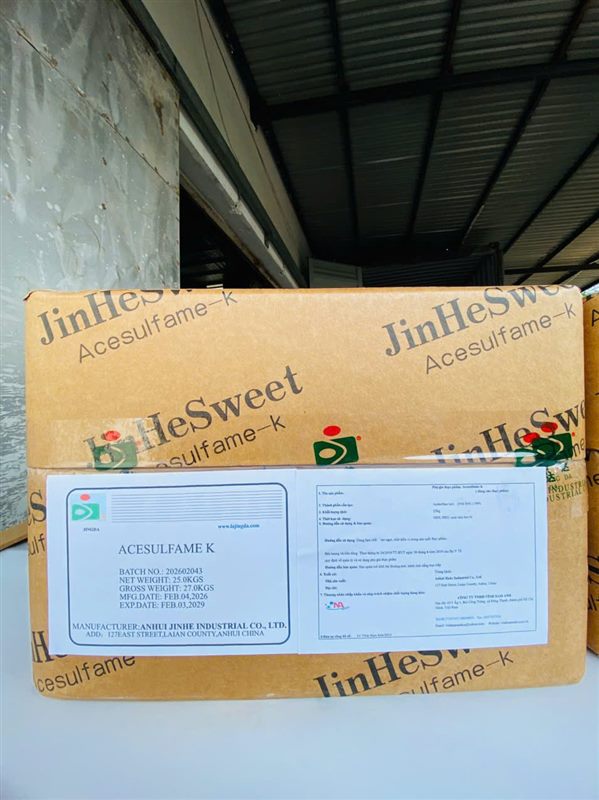
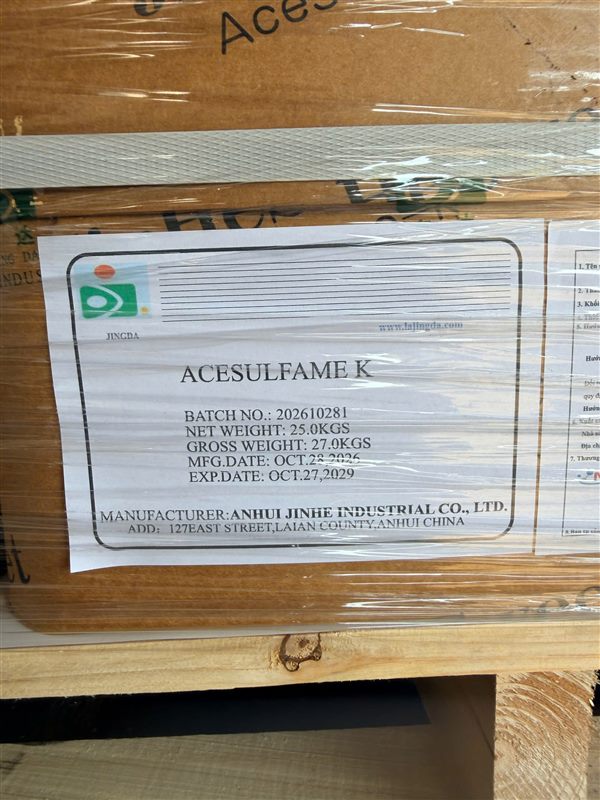
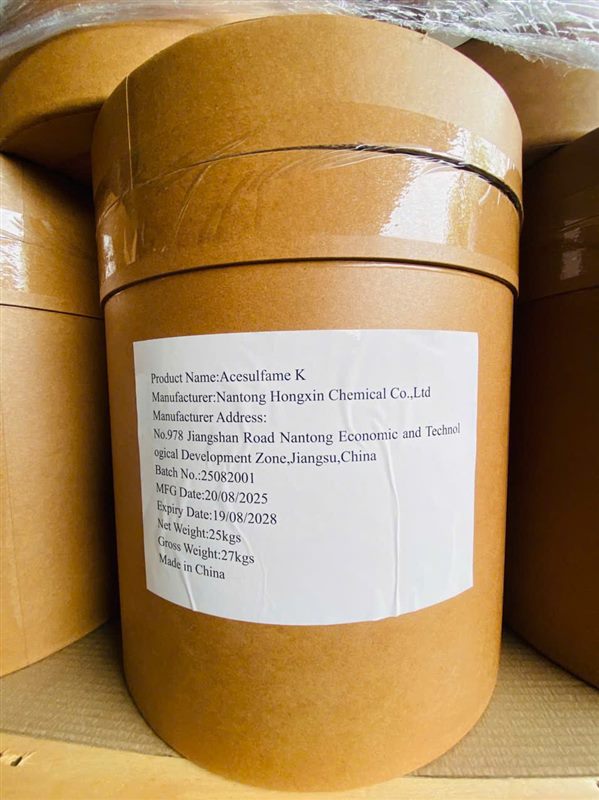
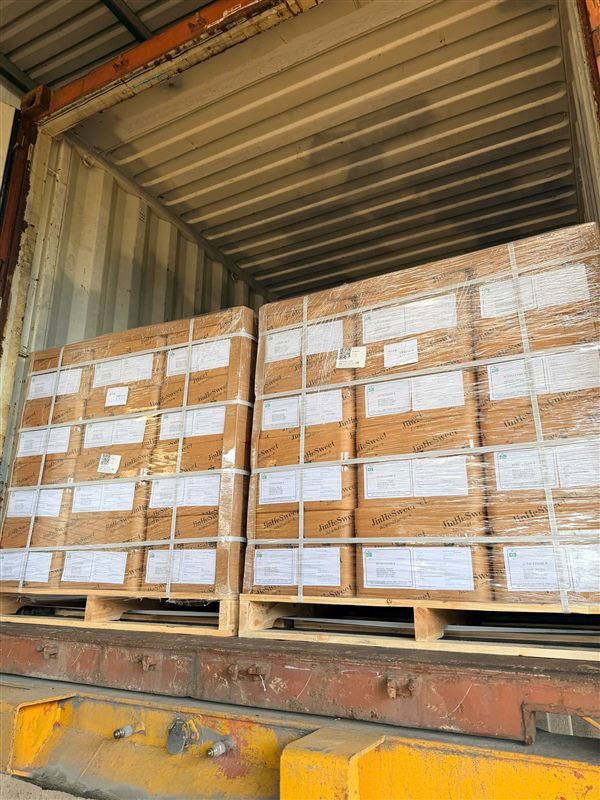
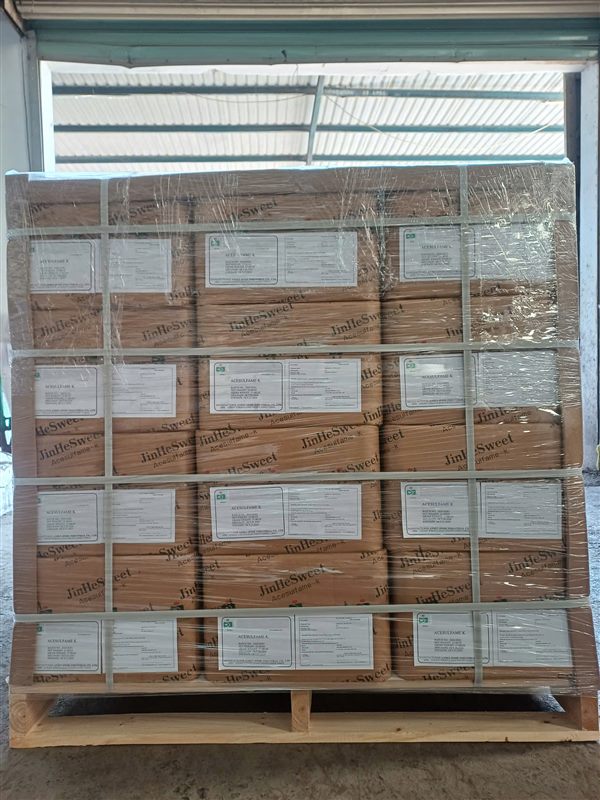
For production, choose a supplier with stock on hand, clear origin and full documentation. Vinh Nam Anh imports Acesulfame K (ACK, E950) food grade sweetener directly from manufacturers in China by container, in 25 kg cartons, with a COA for every batch, CO and invoice, always in stock at our Ho Chi Minh City warehouse with nationwide delivery.
Contact us for an Acesulfame K quotation:
E950 is the additive code for Acesulfame K (Acesulfame Potassium), a synthetic sweetener about 200 times sweeter than sucrose, with zero calories.
Sweetener 950 is permitted by Vietnam's Ministry of Health and approved by the FDA and EFSA. Within the ADI of 15 mg/kg body weight per day, E950 is considered safe. Avoid overconsuming foods and drinks high in sweeteners.
ACK is the common trade name of Acesulfame K (E950) in Vietnam's food industry. It is not real sugar but a synthetic sweetener.
Yes. Acesulfame K, Acesulfame Potassium, Ace-K and ACK are the same substance; "K" is the chemical symbol for potassium.
950 is Acesulfame K and 955 is Sucralose. They are often blended in soft drinks and "sugar-free" foods.
Acesulfame K does not raise blood glucose, so it is common in products for people who need to limit sugar. People with diabetes should follow their doctor's advice and still control total carbohydrate and sugar intake.
Regulators permit it within the ADI. Even so, pregnant women should limit foods and drinks high in sweeteners and consult their doctor.
Acesulfame K provides no calories. However, the WHO (2023) advises against using sweeteners as a long-term weight-loss strategy, as clear benefits have not been shown.
In sweetness, 1 kg of Acesulfame K equals about 200 kg of sucrose. In practice bulking agents are needed because Acesulfame K does not provide sugar's body.
No. Acesulfame K (INS 950) is a permitted additive under Circular 24/2019/TT-BYT, with maximum levels set per food category.
References